Search This Blog

Subscribe By Email

Get Blog Posts Sent by Email

About This Blog

How to Comment on Blog Posts

The spot for the good news, the good word, the quick reports of the many, many wonderful news items I hear all the time and want to share with the rest of you. Expect to find the good news when you come to check out "what’s the good word?"

Showing posts with label preparation. Show all posts

Friday, August 30, 2013

Connect


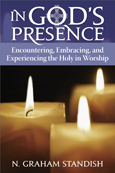
I am currently reading a book by N. Graham Standish, the pastor of Calvin Presbyterian Church in Zelienople, Pennsylvania, entitled In God's Presence.  The book is subtitled Encountering, Experiencing, and Embracing the Holy in Worship.  At this point I am only half way through this title, so blogging about it may be premature, however it has me thinking about the question, "How do we connect with God in worship?" 

Standish discusses the difference between functional and spiritual worship.  He defines functional worship as that which is "more concerned with worshiping in a right or accepted way than a transforming way."  The author then identifies three ways in which worship can become merely functional, through intellectual, traditional, and programmatic emphasis which he defines as follows. 
  • Intellectual functionalism stresses human thinking over spiritual inspiration in preaching, praying, and practice.  (Standish offers that this is a particular temptation of the Presbyterian or Reformed tradition.)
  • Traditional functionalism values maintaining established practices in worship. (Sound familiar to anyone?)
  • Programmatic functionalism focuses more on what attracts people to church, or what grabs, stimulates, or entertains them.
I have certainly experienced all three of these approaches in worship, and so have you.  Sermons are sometimes intellectual because the speaker is, and sometimes to avoid any expression of emotionalism.  Worship planners often prepare worship that is traditional because "we have always done it that way" or because that is what the worship helps suggest.  We want to attract people to worship, and there is nothing wrong with that, however programmatic approaches can lead to gimmicks and formula that seldom produce the desired deep connection with the Sacred.

The truth is that every worship planner may have, at times, approached planning worship in each of these three ways. At times I have taken the easy way in planning a service the way we each know and understand.  This is not necessarily bad, but can also be an expression of spiritual laziness.  It is faster and easier than doing the hard work of discerning what may actually help people connect with the Divine.  I further confess I have gone through periods where I was more concerned with "what works" to attract people to church rather than helping them form a deep connection with God when they got there. This approach is not so much wrong as it is incomplete.

In contrast to functional worship, Standish believes  our task is to create what he calls "intentionally spiritual worship."  Much of this has to do with the prayerful intention and discernment of the worship planner, worship leaders, or speaker. A lot of thought and prayer, and perhaps a lifetime of preparation goes into understanding and discerning people's needs and what really helps them connect with Divinity.  This is not taking the easy way out, and certainly Standish would not support an approach that leads to mere emotionalism. 

In my own experience, the most profound, break through moments of connection with the Divine have been unexpected, and not at my initiative.  Let me offer one example.  I recall many years ago presiding at a communion service with a migraine pounding in my temples, and all I wanted was for the service to be over so I could go home and bury my head under a pillow.  In those moments I began to sense the unexpected promptings of what I have come to know as the Holy Spirit.  Reluctantly and in some surprise, I turned over the Sunday bulletin and began to write down the thoughts that came unbidden.  It seemed that divine Presence wanted to offer words of encouragement and guidance to the congregation concerning a particular situation of need and opportunity.  It was a moment I have never forgotten, and despite my firm belief in careful, prayerful, thoughtful worship planning, an occurrence no worship planner could ever have anticipated.

So here is my question: What helps you connect with the Divine in worship?  What leads you to more fully experience a connection with God?  It need not be dramatic.  Do symbols and rituals help: a cross on the mantle, flowers or candles, the communion emblems?  Does music help you connect?  If so, what kind of music?  What about prayer, sermons, etc?  Does the physical architecture around you make a difference, or preparation of the sanctuary?  What helps you connect? 

Will you click on the comments button and share your experience?  You can do so anonymously if you wish, but your thoughts may help us all as we seek a healthy, deep and satisfying connection with God in worship.

Posted by Carman

Wednesday, October 31, 2012

Conference


The Spirit of the Lord is upon me,
because he has anointed me
to bring good news to the poor.
He has sent me to proclaim
release to the captives
and recovery of sight to the blind,
to let the oppressed go free,
to proclaim the year of the Lord's favor.
- Luke 4:18-19

At the time of this writing, the 2013 World Conference of Community of Christ is just 5 ½ months away. Of course that will be 5 ½ months of winter, but lets not think about that just yet, okay?  

Still, time passes quickly, something I am becoming increasingly aware of the older I get. Like previous conference, the 2013 event will be held at the Church's international headquarters in Independence, Missouri.   Before we know it, conference time will be here.  Those who are willing and able to attend are already putting their names on the CEM delegate list.  If you are a member of Community of Christ and would like to represent Canada East Mission at the 2013 World Conference, you should let Cheryl Campbell know if you have not already done so.  There are still some vacancies available, but the sooner you reserve your place, the better.  

In preparation for the conference, the First Presidency has asked each of us to take the time to make some personal preparation by spending time in study and prayer using Peter Judd’s new book, Christ’s Mission is Our Mission.  This compact but thorough resource calls us to explore deeply the meaning and ministry of Luke 4:16-30.  

To help accomplish this, the book is divided into six chapters, each dwelling on one aspect of the scripture cited above.  Each chapter is further divided by a series of questions for reflection.  These are conveniently embedded into the text at regular intervals, with plenty of material for at least a week spent on each chapter.   Following this method, we might expect to make this resource a daily companion for approximately six weeks.  It will be time well spent, especially in those coming (shiver) winter months.

Christ's Mission is Our Mission is available by mail order from Herald House.  A supply has also been ordered to be available at the CEM office in Guelph for your convenience.

Hmm... now, I wonder why that snow shovel is hanging there right by the garage door!

Posted by Carman

Tuesday, April 24, 2012

Welcome!


In a previous post entitled Walk-Ins, we discussed the phenomenon of people coming to church unexpectedly and simply walking in off the street. We discussed the concept of brand loyalty in religion which now seems to be outdated. Since writing that article, I have hear of more of this activity and wonder if it might be a trend.  The following are some additional thoughts on the subject.

In our day, a person looking for a church is much less likely to ask if there is a local congregation like the one they grew up in. Instead the questions are likely to be based on their own desires or needs. The following are a few questions such a person might ask themselves, their neighbours or their co-workers.
  • Is this church friendly?
  • Will I be welcome there?
  • Will I find a spiritual home?
  • Will attending this church help me find and connect with God?
  • Will going to church here help me make sense of my life?
If the person is a parent, the questions become much more important.
  • Is this church child-friendly, or will my children be welcome here?
  • Is this place safe for my children?
  • If there is a nursery, is it clean, modern and well stocked with safe supplies?
  • Can I trust he people who staff the nursery?
  • Is there a Sunday School, and what will be taught to my child?

Are we ready for people to walk in off the street? How do we know if we are ready? How can we let people know that they are welcome to just walk in? If this topic interests you, watch for future posts to What's the Good Word. I may have a few more thoughts on the subject.

Monday, November 7, 2011

Formation Week 3


When I was assigned to Southwest International (Mexico/USA) Mission Centre, I had several pastors who were part of the World Church pilot Co-Missioned Pastor Initiative. They were all busy people, so I was a little surprised at how eager they were to leave home and travel half way across the country to study. I learned, however, that studying was only part of the picture. These pastors were excited to be together. They had found in each other, peers with whom they could share common problems, issues and frustrations as well as joys, successes and testimonies. The cohort had become a powerful, spiritual support group.

This week the group of twelve pastors who make up Canada East Mission’s pilot CPI are meeting together for their third and last formation week. There will be one more weekend gathering in the spring, but this is their last week-long training session. I’m sure they are looking forward to a great week together.

This time around they will be blessed to have President Becky Savage of the First Presidency of Community of Christ and Jim Poirier from the Presiding Bishopric as guest instructors. Marion Smith will make a “guest” appearance as an instructor mid-week, and Doug Bolger will coordinate the week as well as teach. I will also try to make a contribution. In addition, Nelson Rosales from World Accord will join us for a session as will Paul McKenna from Scarboro Missions Interfaith Department. I anticipate a great experience together.

This fall, the emphasis is on some of the “nuts and bolts” a pastor needs to know and understand. Having already been instructed in such topics as scripture, theology and spiritual formation, now they will concentrate on some of the practical aspects of administrative leadership. The list of subjects is long, but some of the basic elements include forming and working in teams, conducting business meetings, and narrative or mission based budgeting.

Oh dear, I think I just heard someone groan! You may not think that list of topics very exciting, but when you think of who is teaching, it probably gets a whole lot more interesting. Who wouldn’t want to spend time learning from one of the presidents of the church? Further, I firmly believe Jim Poirier’s passion can make any of us excited about the budget as a tool of mission! It is wonderful to have instructors of this caliber available.

Still, the teaching is only part of the picture. This group will also join together in worship and fellowship (read fun). They will have time to talk together, to brainstorm ideas and share experiences. Because they are now in year three of this program, they will assemble with hearts already open to each other. They have learned to trust each other and to allow themselves to be vulnerable to both human and divine grace. It is a very good thing.

As we look to the future of the mission centre, we need to provide more opportunities for this kind of sharing and learning, not just for this group of pastors, but for all of us.

*(picture is from 2010 formation week 2 with Apostle Susan Skoor and Jane Gardner, President of the High Priests' Quorum)

Posted by Carman

Thursday, September 29, 2011

Leap


Last evening, the camping commission of Canada East Mission of Community of Christ met again via teleconference to work on plans for the up-coming Director’s Retreat. As I listened to their thorough and careful planning, I couldn’t help but think of how far we have come. It represents something of a quantum leap from where we were just two short years ago.

Until 2011, CEM sponsored the fall Director’s Retreat and Camp Staff Training day in the spring. Several people who had been involved in both told me Director’s Retreat was very helpful, but the spring gathering was not as strong. That observation was reflected in the attendance. It became clear that we needed a team of people with skills and experience to take over the leadership and direction of our camping ministries. From this realization our camping commission was born.

In the spring of 2011, the weaker Camp Staff Training Day was replaced with Skills and Leadership weekend. For the first time at this event, several key instructors were available to teach camp staff important skills. For example, a professional trainer was provided to help us in the area of conflict resolution and to lead our conversation on the risks as well as the opportunities of using social media. Apostle Susan Skoor offered classes in pastoral ministry. Mike Hewitt instructed Directors and Business Managers about planning, budgeting, and reporting. Other skills were also imparted. It was an excellent start; a strong leap forward.

In the meantime, the camping commission began to turn their attention to some important questions around emergency preparedness. How ready are we at our camps for an emergency? For example, exactly what steps would we need to take to protect our campers in the event of a tornado? What about a fire? Are the directors and staff aware of these steps? Too often, the answer is no, and clearly we need to change that.

If an unknown and potentially hostile intruder were to appear on the grounds, what do we do to protect the children? What exactly will we do in the event of a water emergency? Do we know how to direct emergency personnel (fire, police, ambulance) to the correct area on the campgrounds? Who is responsible to make that call? Who will go to the road to guide emergency personnel when they arrive? In some cases, our campground boards have clearly been working on these areas, but are the camp directors aware of this preparation and how to take advantage of it?

At this year’s Directors Retreat we will begin working together to become better prepared. Campground board executives will be invited to share with directors the plans and preparations they have made. An expert in emergency preparedness is being invited to come and provide appropriate instruction. All this will lay the groundwork for a major emphasis and training at the spring 2012 Skills and Leadership Weekend. An effective coordinated plan is beginning to emerge. It is an amazing leap in the right direction, and our campers will be safer as a result.

Posted by Carman

Tuesday, May 24, 2011

Acceleration

There is a certain sense of acceleration in the air at this time of year, and I am not talking about the tree pollen that makes my nose run. It seems like we’ve been waiting for spring for months, and now it is here. The trees are leafing out, the birds are building or sitting on their nests, and the flowers are blooming. Occasionally we may even see the sun between the rain showers.

The acceleration I am sensing, however, is not really related to the weather or the greening of the countryside. It is something that happens every spring. Preparation and planning has been going on for months but now everyone is picking up the pace. I am talking about the quickening rate of preparation for the camping and reunion season.

I see the urgent emails, hear the worried comments, and share the same sense of anxiety. Camp ground boards are busy making changes and improvements to their facilities, and the camping commission is making sure the word is out on the new Skills and Leadership Weekend. Directors are frantically trying to recruit staff to fill those few remaining vacancies. Worship planners are trying to envision every aspect of their services and prayerfully seeking the right person to offer that prayer or sing that solo. Busy guest ministers are trying to get class material prepared, and worrying about what the can offer in the way of ministry that will meet people’s needs and strengthen the church.

Of course the problem is not just preparing for a summer of ministry. The problem is all the regular work that still needs to get done while you prepare! As May draws near its close, we frantically count the weekends in June, desperately trying to see if there are any days that can be protected so we can read the books we need to brush up on, write class material, prepare sermons, or even have a day just to breathe. Before we know it, July will be upon us, and the busy summer will have begun.

Yes, there is a sense of acceleration in the air these days as we anticipate and prepare for our many family camps, youth camps and summer retreats. The normally busy pace has become downright hectic as we grapple with the tasks that are ours. But here’s the thing about all that: in 13 weeks the camps and reunions will all be over. In 15 weeks the children will be back in school! Its true folks, you can count the weeks for yourself.

The point is that while we are each frantically trying to get ready for the important season of ministry, we need to remember that this season always passes too quickly. Summer will come and go, and when it is gone it can never be recovered. So in the midst of your accelerated pace of work and preparation, please remember to take some time each day to enjoy this season we have all looked forward to. Smell the roses now folks; they do not bloom in January.

Posted by Carman

Thursday, April 28, 2011

Plans

As I begin to prepare this blog post, I have literally just hung up from a long conference call with members of the CEM Camping Commission. Five people, all of whom have busy careers and families gave up yet another evening to wrestle with difficult questions and problems so we can have high quality, safe camps and reunions this summer. I am profoundly grateful. I know that every one of them had other things they could have been doing. For example, none of them got to watch game seven of the Montreal – Boston series tonight, although I am sure some of them would have liked to. Nor did they get to do any of the other things they might have done.

Planning for camps is not easy. Putting good policies in place requires a lot of careful thought and much discussion in order to reach decisions. Who will talk to this person or that? Who will enquire how the boy scouts (for instance) handled that issue? Once we have decided, who will write this policy up and send it to the rest of us? It is a lot to ask of these busy people.

If that weren’t enough, this is also the group that is planning and leading the Skills and Leadership Weekend for all camp and reunion staff at Ziontario on June 17-19. They have done excellent work in preparation for this event in order to make our camps better and safer than ever before. They are recruiting top notch, professional instructors to teach such topics as Conflict Resolution, Group Facilitation, and Social Media Guidance. They are providing for lifeguard training as well as instruction on cooking for large groups. Camp Directors and Business Managers will be given clear guidance on the procedures CEM and the camping commission expect them to follow. Quality child care is being arranged so young adults can take advantage of this training without being held back. You can see why I am grateful; this is a lot of work!

If you are a director of a camp, reunion, or retreat in 2011, I hope you will be at this weekend. Further, I urge you to convince all your staff to take advantage of this training too; it is that important.

If you are already committed to being on staff at a camp this year, there is really no place else you should want to be. If you have any role at all in our camping, reunion or retreat program this summer, or even if you think you might like to be on staff at some future camp, I urge you to reserve the June 17-19, 2011 weekend for this event. Not only will you learn a lot, but you will be with great people, and you will have fun.

Even if you never attend a camp but offer ministry or leadership in a congregation, you will benefit from being at this weekend. The skills you will learn will help you anywhere.

Further more, the camping commission and the CEM staff think this training is so important that we have agreed to offer the Leadership and Skills weekend with no registration fee. You don’t see that in our camping program every day, so why not take advantage of it while you can? Watch for more information to follow soon.

See you on June 17th?

Posted by Carman

Thursday, March 10, 2011

Simmer

We used to frequent a nice little Hiway 7 restaurant that had a sign over the cash register that read “We serve good food not fast food!” And indeed they did. If you were stopping in there for a meal you’d better have time and inclination to sit awhile. Burgers were cooked from raw. The turkey roasted on the weekend was now being served up à la king over homemade biscuits or a nicely simmered turkey vegetable soup just like grandma used to make. The pies were to die for! But they weren’t frozen. If you arrived after the last piece came out of the pan, you were too late.

There’s an official Slow Food Movement that advocates for traditional cooking methods, along with all the associated benefits of taste, sociability, support of positive agricultural and economic systems. Check them out here if you’re interested.

I’ve been thinking of the notion of simmering as I’ve considered the Lenten journey time of waiting I wrote about earlier this week. What does it mean to just wait? I liken it in some ways to simmering.

Very often the thing that recommends a recipe is that it can be “ready in twenty minutes” or “just nuked” for even less time. Families rushing in from work or school and out to practice or meetings want something quick. From freezer to table in less time than it takes to change into your sweats—that’s what we need.

And yet, there is so very much to be said for the long weekend, the extra day to cook up a batch of chili or spaghetti sauce, or to pull that turkey carcass out of the freezer and let it simmer in the stock pot for as many hours as you like. Simmering has just so very many advantages. The house fills up with good smells while the toughest sinews relax and tenderize in the broth. Given enough time and lovin’ a pot of bones and roots and a little handful of herbs and such can emerge as something truly wonderful to warm the heart, fill the belly and pull a family together in ways that no micro-waved pizza pocket can.

What do you think? Are you with me in this period of reflection and introspection, coming out of a long and (for some) dreary winter season, but not yet quite into spring?

“God is doing a new thing” Carman wrote in his Barns blog post recently. I thought I detected a bit of impatience there. What is that new thing and where is it rising up?

Maybe God has us on at a simmer just now, in this waiting time. It doesn’t mean nothing is happening; it’s a different kind of happening.

Like any metaphor, this one doesn’t work totally. Even as I’m reading over what I’ve written I can think of exceptions. If that “new thing” is going to happen, someone needs to be doing the spade work, ensuring the relationships are built and the preparation done to enable it to be.

I feel fortunate to be one of the ones who has the luxury to follow the instruction to “don’t just do something, sit there!” Sit there and simmer.

Posted by Marion

Tuesday, March 8, 2011

Journey

Have you ever thought just how often we use this word? “It’s not so much the destination; it’s the journey that counts.”

I’m finding myself thinking just how many journeys I’m on—all at the same time! Is that really possible? Apparently, for I find myself simultaneously on the “journey of my whole life” the “journey of career” a certain “family journey” I share with that special group of people. You may recall last year my siblings and I moved to the front row of our family portrait following my mother’s death. Our journey entered a new phase as we became the older and wiser generation. Most of us felt the shift, without much real sense of being new people. I know I don’t feel a whole lot wiser, but there you are—there’s nobody else to ask now. It’s just us. All part of the journey!

Pilgrimage is also a lovely metaphor. But really, it’s just another word for journey. It’s a special journey undertaken for a purpose. I’ve read several accounts of the Camino de Santiago, most notably this one written by Joyce Rupp, that recounts the main reason for undertaking a pilgrimage as a time to reflect on one’s own life journey and consider the lessons our own life has for us, if we just pay attention. Most of us will not be packing our knapsacks and trekking over to Spain though to let the Spirit of life teach us. I know I won’t!

This week, Christians everywhere set out upon a kind of journey that begins with Ash Wednesday. It’s even referred to as the Lenten "Journey. Our denomination, or at least my experience of it, did not consider these signposts on the Christian calendar much when I was growing up. Ash Wednesday and Lent were considered too “high church” for our taste. My mother did usually serve pancakes for supper on Shrove (or Pancake) Tuesday. That was as special as we ever made it, with little connection to the days of sacrifice to follow.

But my life journey has taken me into different byways. I’ve come to appreciate the unfolding of the Christian story the liturgical calendar offers. I’m glad we’ve reclaimed our connections to the ancient ways. I like the idea of a little pause in my faith journey that allows me, even encourages me, to spend some time in intentional reflection about how my life, my faith, my relationship to matters spiritual or divine are going just now.

As I’m preparing for another turning point along my life’s path, this Lenten season comes at just a right moment for me. How often does that happen? Much too often to be considered entirely happenstance I think. There is an inherent wisdom in the cycles of the rituals that return again and again, giving us the opportunity—if we elect to use it—to slow down and consider just how this journey is going.

Like Advent, this time of Lent is the part of the “road to transformation that leads inward” (Section 161: 3d). Like Advent Lent is a “time of waiting” not only in the sense of anticipating a future event, but also a time to be, to rest in that waiting time as a significant and crucial element of the journey. I welcome it. What about you?

Posted by Marion

Tuesday, February 1, 2011

Hatches

All signals appear to be that we should be “battening down the hatches” in anticipation of some severe weather on its way here. All around me people are preparing for canceled meetings, lots of gas in the tanks, pantry stocked and plans made for kids at home for snow day—maybe even multiple days.

I’m thinking of ways this relates to an ongoing conversation we’ve been having around our CEM lunch table lately. It’s as if there’s something anticipated; no one is quite certain what it will look like, but there’s the definite sense that we’d better be getting prepared. One of the tasks of leadership is to cast the “long eye” into the future to try to discern the signs and signals and then to come up with some strategies to make ready. Whether this future is a stormy one or not, there’s still the need to get prepared.

The tendency is to look at the storm that’s already forming up on the near horizon. How do we meet this year’s budget? Who will take on the church school director’s job? Who will speak next week, next month, next year? How do we get more bums in pews? And we know that if we focus on all those urgent questions, we’ll find ourselves asking more serious questions. Is it time to sell this building? What happened to the next generation of leaders? How will we replace those faithful donors?

Of course in some instances the life-cycle of a congregation has indeed run its course and we will need to celebrate decades of ministry and blessing to a community and say a fond good-bye. That will happen. But sometimes it’s just lack of vision and strategic thinking and focusing on the “urgent” rather than the “important” that bring us to the brink of an unwelcome and unnecessary future.

Whether or not this blizzard hits us, there will be storms in our future. Our task as leaders and as members is to realize that we need to be ready. And being ready is long-range. It’s making sure the kids feel included and respected. It’s ensuring the youth get to connect with friends and have opportunities to expand their world into the broader church and into the wider community. It’s giving youth and young adults genuine roles and real responsibilities and making ready to hand off leadership to a new generation, already equipped with practical skills and experience and supportive networks to take over. It’s taking time out from the nitty-gritty of all those urgent things that need our attention to slow down and take the long look to make sure we have a future when it arrives.

I’d sure love to hear from you some of the things you’re doing in your congregation to look into this longer future. Maybe a couple of stormy days might give you just the opportunity you need to do that.

Posted by Marion

Thursday, December 9, 2010

Bread & Butter

My blogging friend PeaceBangasked a question that stirred something in me. She’s been working with an Alban Institute vocation consultant who wanted her to think about “What are you a commitment to?” When PB explained that this is not the same as “what are you committed to?” I understood immediately.

Several years ago I went to a workshop with author and consultant Peter Block. His question was “What is your vision of greatness?” and he forced us to come to an answer. In order to tap into another part of our brains, he asked us to draw a picture of that vision and then to explain our picture to the other workshop participants. I can still see the picture I drew that day because it is the answer to that question: what are you a commitment to? It has guided all the work I have done since then and it remains my vision until today!

My picture was one of a loaf of bread and a pat of butter. My explanation went something like this. Whatever I do, whenever I teach a class or preach a sermon or write something or offer advice or do a consultation I want to be sure that what I offer is as basic and as immediately useful as bread and butter. Nothing fancy; just plain bread and butter, nourishing and nutritious. It’s always there driving what I do. It’s there when I’m preparing or doing research or reading. It’s so very present that I seldom think about it; it’s just the way I do business. I’m not suggesting I’ve always been totally successful. That’s the other side of the story and I need your input to answer that. But it’s there at source for me.

This week I’m preparing a couple of sermons and I’ll be teaching a Scripture workshop at Faubert Drive congregation this weekend (weather permitting!). I’ve been struggling all year to find a venue to do a Youth Worker training day. I’ve been at reunions and retreats and CPI gatherings and lots and lots of congregations or visits with pastors (and librarians, Sunday school teachers, worship planners, preachers, mentors, advocates…) and facebook encounters or email exchanges and it’s always, always there in what I try to offer. Is this as good and basic and helpful and immediate as bread and butter?

I pass along the challenge to you. What are you a commitment to? What is your personal vision of greatness?

And as Peter Block would say if someone claimed not to have such a vision: If you had a vision of greatness, what would it be?

Posted by Marion